Physical Address
304 North Cardinal St.
Dorchester Center, MA 02124
Physical Address
304 North Cardinal St.
Dorchester Center, MA 02124

Food is meant to nourish us, bring joy, and connect cultures. But not every dish is harmless. In fact, some of the most fascinating and exotic foods eaten around the world are also the most dangerous. From poisonous fish to fermented dishes that can make you seriously ill, these foods push the limits of culinary daring.
Why do people still eat them?
For many, it’s about tradition, culture, status, or thrill-seeking. For others, it’s simply because these foods taste incredible—if prepared correctly.
So buckle up, because we’re about to explore the 10 most dangerous foods people eat around the globe, ranked from 10 to 1, with number one being the riskiest of all.
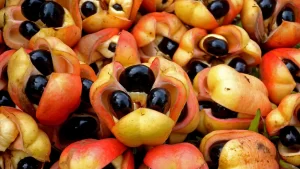
The national fruit with a deadly secret
Ackee is Jamaica’s national fruit, often served in the famous dish ackee and saltfish. When ripe, it’s buttery and delicious, but if eaten unripe, it contains toxins called hypoglycin A and B. These toxins can cause vomiting, seizures, and in severe cases, even death.
👉 Why people still eat it: Ackee is central to Jamaican cuisine and culture. Prepared properly, it’s perfectly safe and absolutely delicious.
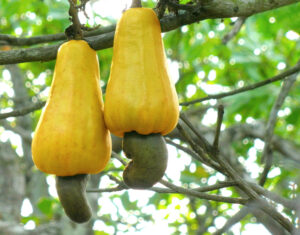
Not as harmless as they look
Cashews in stores are labeled “raw,” but they’ve actually been steamed to remove toxins. True raw cashews contain urushiol, the same chemical found in poison ivy, which can cause severe allergic reactions and even be fatal in high doses.
👉 Why people still eat it: Cashews are rich, creamy, and versatile. Once processed, they’re completely safe, which is why they’re one of the world’s favorite nuts.
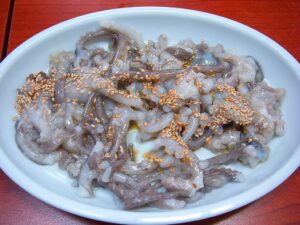
The squirming octopus dish
A South Korean delicacy, sannakji is baby octopus served live—often still wriggling on the plate. The danger comes not from toxins, but from the suction cups on the tentacles. If not chewed thoroughly, they can stick to the throat and cause choking.
👉 Why people still eat it: Many say eating sannakji is about bravery and freshness. The chewy texture and thrill of the moving tentacles make it a unique dining experience.
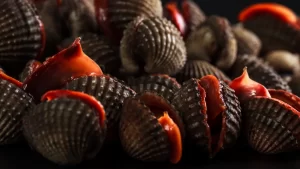
A shellfish that hides deadly diseases
Blood clams get their name from their red hemoglobin-rich liquid. Unfortunately, they’re often harvested in polluted waters and can carry viruses like hepatitis A, typhoid, and dysentery. In some countries, they’ve even been banned.
👉 Why people still eat it: For many seafood lovers, blood clams have a unique flavor that’s rich and briny. In places like Shanghai, they’re considered a delicacy despite the risks.

The cheese that wriggles with maggots
This Sardinian specialty is a traditional sheep’s milk cheese intentionally infested with live fly larvae. The maggots break down fats, making the cheese soft and spreadable. The danger? Eating live maggots can cause intestinal infections, and if they survive digestion, they may burrow inside the stomach lining.
👉 Why people still eat it: Casu marzu is considered a delicacy in Sardinia, with a strong, pungent flavor unlike any other cheese. Locals even claim it’s an aphrodisiac.
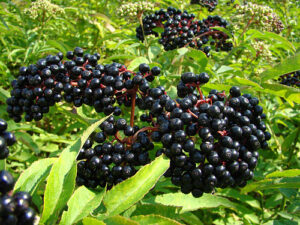
Healthy… but dangerous if unripe
Elderberries are famous in syrups, teas, and wines, often used as a natural remedy for colds and flu. But raw or unripe elderberries contain cyanogenic glycosides, which release cyanide in the body. Eating them raw can cause nausea, diarrhea, and in severe cases, poisoning.
👉 Why people still eat it: Once cooked or processed, elderberries are safe and packed with antioxidants. That’s why they remain a staple in traditional medicine.

Eat the wrong part, and it could be your last meal
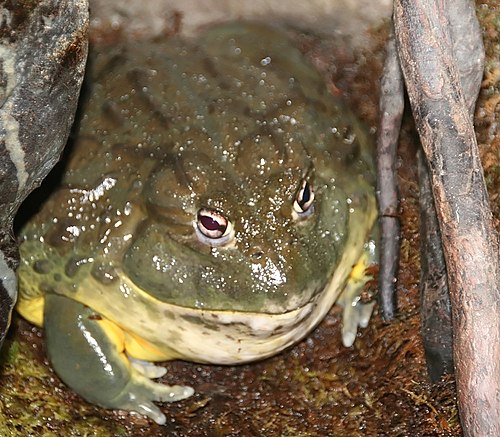
In Namibia, bullfrogs are eaten whole and considered a delicacy. But they must be cooked at the right stage of their life cycle. If eaten too young, the frogs contain toxins that can cause kidney failure.
👉 Why people still eat it: Bullfrog is rich in protein and part of local tradition, often eaten during festivals or special occasions.

Fermented shark with a deadly history
Hakarl is made from Greenland shark, which is poisonous if eaten fresh due to its high levels of uric acid and trimethylamine oxide. To make it edible, Icelanders ferment it for months and then dry it for several more. The result is a pungent, ammonia-rich dish that smells worse than it tastes.
👉 Why people still eat it: Hakarl is part of Icelandic heritage, often eaten during festivals. Tourists try it for bragging rights, but locals enjoy its unique flavor and cultural value.
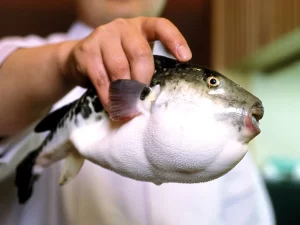
The infamous pufferfish
Fugu, or pufferfish, is perhaps the world’s most famous dangerous food. Its organs contain tetrodotoxin, a poison 1,200 times deadlier than cyanide. There is no known antidote. Only highly trained, licensed chefs are allowed to prepare it, carefully removing toxic parts.
👉 Why people still eat it: Fugu is considered a luxury dish in Japan, prized for its delicate taste and the thrill of eating something potentially lethal.
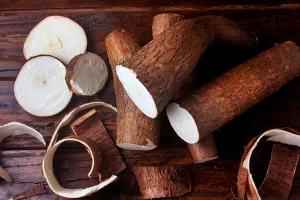
The staple food that can kill
Topping our list is cassava, also known as yuca or manioc. It’s a root vegetable eaten by millions worldwide, but it naturally contains cyanogenic compounds. If not properly soaked, fermented, or cooked, cassava can release cyanide in the body and cause fatal poisoning.
👉 Why people still eat it: Cassava is a vital food source, feeding over half a billion people. When prepared correctly, it’s safe, versatile, and an essential part of diets in many developing countries.
It might sound shocking, but humans have always pushed culinary boundaries. There are three main reasons:
Tradition & Culture – Many of these foods are tied to rituals, celebrations, or national pride.
Flavor & Uniqueness – Some of these dishes have flavors impossible to replicate elsewhere.
Thrill & Status – Eating dangerous food can be seen as adventurous or even prestigious.
From poisonous roots to wriggling seafood, the world of food is as dangerous as it is fascinating. While most of us stick to safe, everyday meals, millions embrace these risky delicacies as part of their culture.
Would you dare to try fugu, hakarl, or sannakji? Or would you rather play it safe with pizza and pasta?
One thing is certain: food is more than just nourishment—it’s adventure on a plate.
